
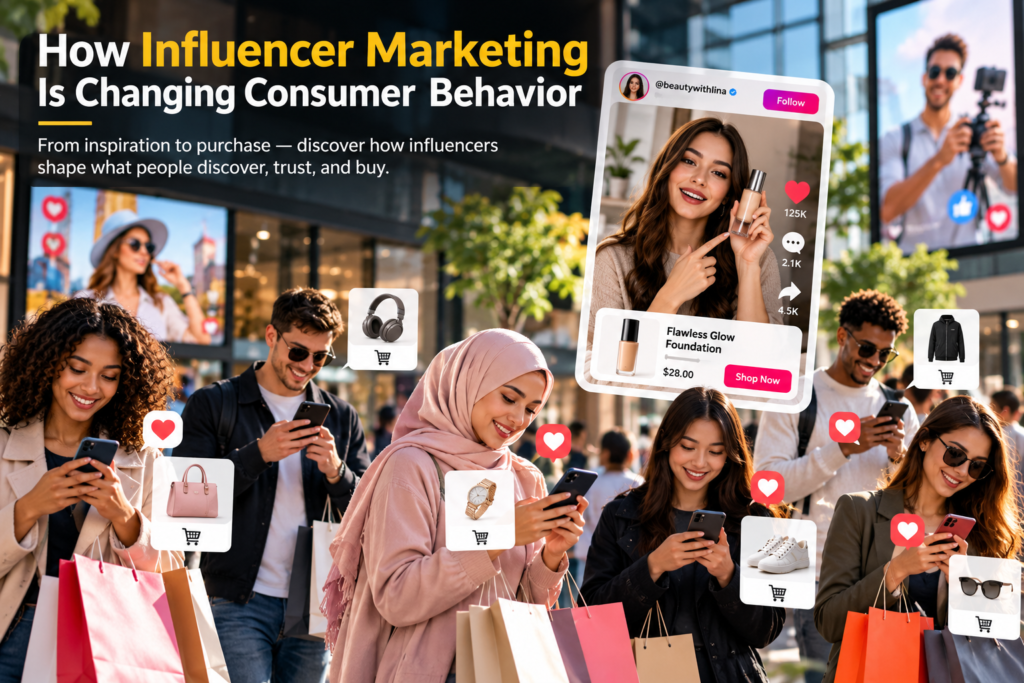
The way people discover and choose products has changed significantly in recent years. Traditional advertising is no longer the only way businesses reach potential customers. Today, social media creators and influencers play an important role in shaping opinions, building trust, and influencing purchasing decisions.
Influencer Marketing has become an effective digital marketing strategy because it connects brands with audiences through people they already follow and trust. From product recommendations to reviews and tutorials, influencers can have a strong impact on how consumers discover and evaluate products.
What Is Influencer Marketing?
Influencer Marketing is a strategy where businesses collaborate with individuals who have an established audience on platforms such as Instagram, YouTube, TikTok, and other social media networks.
Instead of promoting a product directly to consumers, a brand works with an influencer who presents the product to their audience. The content may include a review, tutorial, demonstration, recommendation, or sponsored post.
The effectiveness of this approach often comes from the relationship between influencers and their followers.
How Influencers Build Consumer Trust
Trust is one of the most important factors in consumer behavior. People are more likely to consider a recommendation when it comes from someone they regularly follow and whose opinions they value.
Influencers often share their experiences, preferences, and opinions with their audiences. Over time, this can create a sense of familiarity and connection.
For example, a beauty influencer who regularly demonstrates skincare products may influence followers who are looking for new skincare solutions. The audience may see the influencer’s experience as more relatable than a traditional advertisement.
Influencers Affect Purchasing Decisions
One of the biggest impacts of Influencer Marketing is its ability to influence purchasing decisions.
Consumers often discover products while watching social media content. An influencer may introduce a product that a consumer had never considered before. After seeing how the product works, the consumer may search for more information, read reviews, compare prices, and eventually make a purchase.
This creates a powerful journey:
Discovery → Interest → Research → Trust → Purchase
Influencers can therefore play a role at several stages of the buying process.
The Rise of Authentic Content
Consumers increasingly look for content that feels genuine and relatable. Highly polished advertisements can sometimes feel distant, while influencer content may appear more natural.
For this reason, many brands allow influencers to create content in their own style rather than giving them a strict advertising script.
Authenticity can make a recommendation more engaging because followers already understand the influencer’s personality, interests, and communication style.
However, influencers should remain transparent when promoting sponsored products. Clear disclosure helps maintain trust with their audience.
Micro-Influencers Are Becoming More Important
Influencer Marketing is not limited to celebrities with millions of followers. Micro-influencers, who have smaller but highly engaged audiences, can also be valuable to brands.
A micro-influencer may focus on a specific area such as fitness, technology, beauty, fashion, travel, or personal finance.
Because their audiences are often more specialized, their recommendations can feel more relevant and personal. For businesses, working with several smaller influencers can sometimes be an effective way to reach specific customer groups.
Social Media Makes Shopping More Interactive
Social media has transformed shopping from a simple transaction into an interactive experience.
Consumers can now:
- Watch product demonstrations
- Ask influencers questions
- Read comments from other users
- Compare recommendations
- Discover new brands
- Follow product trends
- Purchase products directly through social platforms
This combination of entertainment, information, and shopping has made the customer journey more dynamic.
Influencer Marketing and Brand Awareness
Influencers can also help businesses increase brand awareness. A single piece of content can introduce a brand to thousands or even millions of potential customers.
When consumers repeatedly see a brand through creators they follow, they may become more familiar with it. Even if they do not purchase immediately, the brand may remain in their memory when they eventually need a related product.
This makes Influencer Marketing particularly useful for businesses trying to reach new audiences.
Challenges of Influencer Marketing
Although Influencer Marketing offers many advantages, it also has challenges.
Not every influencer is suitable for every brand. A large number of followers does not necessarily mean high engagement or strong influence.
Brands should consider:
- Audience relevance
- Engagement rate
- Content quality
- Influencer reputation
- Audience demographics
- Transparency and authenticity
Consumers can also become skeptical when influencers promote too many products or recommend products that do not match their usual content.
The Future of Influencer Marketing
As social media continues to evolve, Influencer Marketing is likely to remain an important part of digital marketing.
Brands are increasingly focusing on long-term relationships with creators instead of one-time promotions. At the same time, consumers are becoming more selective about which recommendations they trust.
Successful influencer campaigns will therefore depend on relevance, authenticity, transparency, and valuable content.
Conclusion
Influencer Marketing is changing consumer behavior by making product discovery and recommendations more personal and interactive. Influencers can help consumers discover new products, evaluate their options, and make purchasing decisions.
For brands, the key is not simply to work with influencers who have large audiences. The most effective partnerships are built around trust, relevance, authenticity, and genuine audience engagement.
As consumers continue to spend more time on social media, influencers will remain an important connection between brands and the people they want to reach.